What to Do Immediately After a Work-Related Accident: A Step-by-Step Guide for Texas Workers

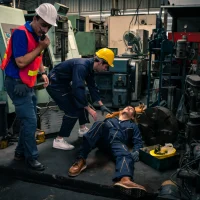
A serious workplace accident can happen in seconds. A worker may be struck by equipment, fall from an elevated platform, suffer a chemical exposure, become caught in industrial machinery, or sustain an injury in a construction or oilfield accident. Afterward, however, the consequences can continue for months or years. Medical treatment, lost income, physical limitations, and questions about who is responsible can quickly become part of an injured worker’s life.
Knowing what to do immediately after a work-related accident can make an important difference. Reporting the injury and obtaining medical care are essential, but workers should also understand that a workplace accident does not necessarily mean workers’ compensation is the only potential source of recovery. In Texas, some employers do not carry workers’ compensation insurance, while other workplace accidents are caused by third parties that may be legally responsible for the resulting injuries.
Gilbert Adams Law Offices represents injured workers throughout Beaumont, Southeast Texas, and statewide in civil claims arising from industrial accidents, construction accidents, oilfield injuries, and other dangerous working conditions. If you have been seriously injured on the job, taking the right steps immediately can help protect both your health and your legal rights.
1. Get Out of Immediate Danger
Your first priority after an accident should always be your safety. If you are able to do so without putting yourself or anyone else at risk, move away from continuing hazards and alert coworkers or supervisors to the danger.
This can be particularly important in industrial, construction, and oilfield environments. A workplace accident involving heavy machinery, electrical systems, chemicals, pressurized equipment, fires, explosions, or unstable structures may create additional hazards after the initial incident.
Do not return to a dangerous area simply to retrieve personal belongings or investigate what happened. Emergency personnel and trained safety professionals should handle ongoing hazards.
2. Get Medical Attention as Soon as Possible
Even if an injury initially seems minor, seek medical attention promptly. Some symptoms can manifest hours, days, or even weeks following an accident. Traumatic brain injuries, spinal injuries, internal injuries, nerve damage, and certain chemical exposures may become more apparent over time.
Tell the medical provider that the injury occurred at work and explain exactly what happened. Be specific about where you are experiencing pain, numbness, weakness, dizziness, or other symptoms. If you later develop additional symptoms, report those symptoms to your medical provider as well.
Medical records are important evidence in a workplace injury claim. Prompt treatment creates documentation connecting your medical condition to the workplace accident and provides a baseline against which any improvement can be tracked.
3. Report the Accident to Your Employer
Report the accident to your employer as soon as possible, preferably in writing. Follow the company’s procedures for reporting workplace injuries, but do not assume that telling a coworker is sufficient.
For job injuries covered by Texas workers’ compensation, an employee must notify the employer of the injury within 30 days after the date of injury or the date the employee knew the injury or illness was related to the job. Texas Department of Insurance guidance also states that an employee must file a DWC Form-041 with the Division of Workers’ Compensation within one year to protect the right to workers’ compensation benefits.
These workers’ compensation deadlines are separate from deadlines that may apply to a personal injury lawsuit. If you are unsure whether your employer carries workers’ compensation coverage, do not assume that it does. Texas does not require most private employers to carry workers’ compensation insurance, although many do.
4. Find Out Whether Your Employer Has Workers’ Compensation Coverage
One of the most important questions following a workplace injury in Texas is whether your employer is a workers’ compensation subscriber.
Except for companies with certain government or public construction contracts, a private Texas employer is not required to carry workers’ compensation insurance. An employer that does not provide workers’ compensation coverage is commonly referred to as a non-subscriber. Texas employers that do not carry coverage are subject to specific notice and reporting requirements.
This distinction can substantially change an injured worker’s legal options.
When workers’ compensation coverage applies, the workers’ compensation system provides medical and income benefits while limiting most lawsuits against a subscribing employer; however, oftentimes there are also rights to assert common law claims against third parties who caused or contributed to the cause of an on-the-job accident. When an employer is a non-subscriber, however, an injured worker may be able to pursue a civil lawsuit against the employer. Texas law also limits certain defenses available to non-subscriber employers.
Because the difference between a workers’ compensation claim and a non-subscriber lawsuit can be significant, injured workers should determine their employer’s coverage status as early as possible.
5. Do Not Assume Your Employer Is the Only Potentially Responsible Party
Workplaces such as construction sites, refineries, oilfields, shipyards, and industrial facilities frequently involve multiple companies or employers operating at the same location.
Your employer may be only one of several entities that played a role in causing an accident. A general contractor, subcontractor, property owner, equipment manufacturer, maintenance company, equipment rental company, or another contractor may have created or contributed to the dangerous condition.
For example, suppose a construction worker is injured when a piece of equipment malfunctions. The worker’s employer may not have manufactured or maintained that equipment. A separate company may have been responsible for maintenance, while another company may have supplied the machinery. If a defective component caused the accident, the manufacturer could potentially be another source of liability.
These are examples of third-party liability claims, and they can be particularly important when workers’ compensation limits an employee’s ability to sue the direct employer.
6. Preserve Evidence Before It Disappears
Evidence can disappear quickly after an industrial or construction accident. Equipment might be repaired or discarded. A worksite may be cleaned. Employees may be reassigned. Surveillance footage may be overwritten. Electronic records may be deleted as part of ordinary business practices.
If you are physically able to do so, document the accident scene. Photographs of equipment, warning signs, work surfaces, protective equipment, damaged structures, and the surrounding area may become valuable evidence.
Do not place yourself in danger to obtain photographs. If you cannot safely document the scene yourself, witnesses, attorneys, investigators, or other appropriate personnel may be able to preserve evidence.
It is also important to identify people who witnessed the accident or who may have knowledge about the conditions leading up to it. Obtain their names and contact information if you can do so safely and appropriately.
7. Keep Copies of Important Documents
Save copies of anything related to the accident and your employment. Depending on the circumstances, this may include accident reports, incident reports, safety notices, disciplinary documents, medical records, medical bills, pay records, work restrictions, photographs, emails, text messages, and communications with your employer or an insurance company.
You should also preserve documents relating to safety training, equipment operation, job assignments, and the conditions that existed when the accident occurred.
If your employer asks you to sign a statement, release, settlement agreement, or other document concerning the accident, consider having an attorney review it before signing. A document that appears routine could affect your legal rights.
8. Be Careful When Discussing the Accident
After a serious workplace accident, you may be asked to provide statements to your employer, an insurance company, an investigator, or another company involved in the project.
It is important to cooperate with legitimate accident investigations, but you should be truthful and stick to what you actually know. Avoid guessing about the cause of an accident or making statements about who was at fault before all of the facts are known.
You should also avoid posting about the accident or your injuries on social media. Photographs, comments, and other online activity can potentially be taken out of context and used by an opposing party or insurance company.
9. Follow Your Medical Treatment and Document Your Recovery
Following your doctor’s recommendations is important for your health and for documenting the consequences of the injury. Attend follow-up appointments and diagnostic testing, and tell your medical providers if symptoms continue or worsen.
Keep track of how the injury affects your daily life and ability to work. A serious workplace injury may affect your ability to lift, stand, walk, climb, operate machinery, concentrate, or perform other tasks that were previously routine.
This information can become particularly important in a civil claim involving lost wages, diminished earning capacity, permanent impairment, pain and suffering, or future medical treatment.
10. Talk to an Attorney About Non-Subscriber and Third-Party Claims
A workers’ compensation claim and a civil personal injury claim are not the same thing. If your employer is a non-subscriber, you may have a civil claim against the employer. If another company contributed to the accident, you may have a third-party claim.
These cases require an investigation into what happened, who controlled the worksite, who owned or maintained the equipment, what safety procedures were in place, and whether any company or individual violated applicable safety requirements.
This is particularly important in complex industrial environments. A construction project, refinery, oilfield, or maritime operation may involve numerous contractors and subcontractors, each with different responsibilities and insurance coverage.
An attorney can investigate these relationships and determine whether parties other than your direct employer may be legally responsible for your injuries.
Construction, Industrial, and Oilfield Accidents Require Prompt Investigation
Work-related accidents in Southeast Texas can involve unusually complicated facts. Construction projects change rapidly. Oilfield and refinery equipment may be repaired or moved after an accident. Industrial facilities may have multiple contractors working simultaneously. These circumstances make early evidence preservation particularly important.
Regulatory records, safety inspections, equipment maintenance histories, training records, electronic data, photographs, video footage, and witness statements may all help establish what happened. Depending on the circumstances, OSHA requirements and other workplace safety standards may also provide important evidence concerning whether reasonable safety measures were followed.
An injured worker should not have to conduct this investigation alone while simultaneously recovering from a serious injury.
Protect Your Rights After a Texas Workplace Accident
A workplace injury can have consequences that extend far beyond the initial accident. If you work in construction, an oilfield, a refinery, a manufacturing facility, a shipyard, or another industrial setting, understanding your legal options is essential.
Report your injury, obtain appropriate medical care, preserve evidence, and determine whether your employer carries workers’ compensation coverage. Just as importantly, do not assume that workers’ compensation is the only possible avenue for recovery. A non-subscriber employer or negligent third party may be legally responsible for damages that extend beyond workers’ compensation benefits.
Gilbert Adams Law Offices represents injured workers in Beaumont, Southeast Texas, and throughout Texas in civil claims involving non-subscriber employers and third-party liability. If you have been injured at work, contact Gilbert Adams Law Offices as soon as possible to discuss what happened, identify potentially responsible parties, and protect your right to pursue the compensation you may be entitled to receive.