
How Underinsured and Uninsured Motorist Coverage Affects Your Claim in Texas
 Motor vehicle accidents in Texas often involve drivers who carry little insurance, or even none at all. While Texas law requires minimum liability coverage, those limits are frequently insufficient to cover the full cost of serious injuries. Even worse, over 14% of Texas drivers fail to even carry the minimum amount required by law. When the at-fault driver lacks insurance or does not have enough coverage to pay for the harm they caused, underinsured and uninsured motorist coverage can become one of the most important parts of an injury claim.
Understanding how uninsured motorist (UM) and underinsured motorist (UIM) coverage works under Texas law can make a substantial difference in whether an injured person is fully compensated. These claims are often misunderstood, undervalued, or mishandled by insurance companies, even though the coverage exists specifically to protect injured drivers and passengers.
If you or a loved one has been injured in a car or truck crash in Beaumont, Southeast Texas or statewide, contact Gilbert Adams Law Offices to speak with a skilled and experienced Texas uninsured motorist injury attorney.
What Is Uninsured and Underinsured Motorist Coverage?
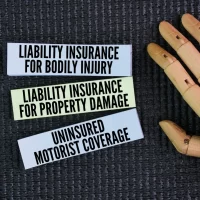
Uninsured motorist coverage applies when a person is injured by a driver who has no liability insurance at all, whose policy has lapsed, or who flees the scene and cannot be identified, such as in a hit-and-run crash. Underinsured motorist coverage applies when the at-fault driver does have insurance, but their policy limits are too low to cover the injured person’s damages.
In Texas, UM and UIM coverage are typically offered together and are often referred to collectively as UM/UIM coverage. This coverage is purchased as part of your own auto insurance policy and is intended to step into the shoes of the at-fault driver when that driver’s insurance is unavailable or inadequate.
Although UM/UIM coverage is optional under Texas law, insurance companies are required to offer it. A policyholder must affirmatively reject it in writing if they choose not to carry it. Many drivers are unaware they have this coverage until they are involved in a serious crash.
Why UM/UIM Coverage Is So Important in Texas
Texas has a large number of uninsured and underinsured drivers on the road. Even when a driver carries the minimum required liability insurance, those limits are often quickly exhausted in accidents involving severe injuries. Emergency medical care, hospitalization, surgery, rehabilitation, and lost income can easily exceed policy limits.
UM/UIM coverage provides an additional source of recovery when the at-fault driver cannot fully compensate the injured party. Without it, an injured person may be left paying medical bills and other losses out of pocket, even though another driver caused the crash.
This coverage can apply in a wide range of situations, including car and truck accidents, motorcycle crashes, pedestrian injuries, bicycle accidents, and hit-and-run collisions.
How Uninsured Motorist Claims Work
In an uninsured motorist claim, the injured person seeks compensation through their own insurance policy because the at-fault driver has no applicable liability coverage. Common examples include hit-and-run accidents where the driver is never identified, or crashes caused by drivers who never carried insurance.
To recover under UM coverage, the injured person must generally prove the same elements required in a standard negligence claim. This includes showing that the other driver was negligent, that the negligence caused the crash, and that the injured person suffered damages as a result. In effect, the insurance company stands in the place of the uninsured driver and is permitted to challenge liability and damages.
How Underinsured Motorist Claims Work
Underinsured motorist claims arise after the at-fault driver’s liability insurance has been exhausted. This usually means that the injured person has settled with the at-fault driver’s insurer for the policy limits, but those limits are insufficient to cover the full extent of the injuries and losses.
In a UIM claim, the injured person then seeks additional compensation from their own insurer, up to the limits of their UM/UIM policy. The amount available depends on the policy limits purchased and the damages proven. Importantly, UIM benefits do not automatically apply; the injured person must follow specific procedural steps and provide notice to their insurer.
Common Misconceptions About UM/UIM Claims
Many people assume that filing a UM or UIM claim is the same as filing a standard first-party insurance claim, or that their insurer will automatically act in their best interests. In reality, UM/UIM claims are often adversarial. The insurance company may dispute fault, argue that injuries are exaggerated, or minimize the value of the claim.
Another common misconception is that accepting a settlement from the at-fault driver’s insurer prevents a UIM claim. In Texas, injured parties must be careful to preserve their UIM rights by properly notifying their insurer before settling and ensuring that the settlement complies with policy terms. Failing to follow these steps can jeopardize UIM benefits.
What Damages Are Available in UM/UIM Claims?
UM/UIM coverage can compensate for the same types of damages available in a typical personal injury claim. These may include medical expenses, future medical care, lost wages, loss of earning capacity, pain and suffering, emotional distress, physical impairment, and loss of enjoyment of life.
The injured person must still prove these damages with evidence. UM/UIM coverage does not guarantee payment of a specific amount; it provides access to additional insurance funds when liability coverage is missing or insufficient.
Evidence Needed to Support a UM/UIM Claim
Strong evidence is critical in uninsured and underinsured motorist claims. Insurance companies often scrutinize these claims closely, particularly because they are paying benefits directly under their own policy.
Medical records are central to establishing the nature and severity of injuries. This includes emergency room records, diagnostic imaging, surgical reports, therapy records, and treating physician opinions regarding future care and permanent impairment. Consistent medical treatment helps demonstrate that injuries are legitimate and related to the crash.
Accident evidence is also essential. Police reports, photographs of vehicle damage, scene photos, witness statements, and crash reconstruction analysis may be used to establish how the accident occurred and who was at fault. In hit-and-run cases, evidence showing that physical contact occurred is particularly important.
Testimony from the injured person and from family members, friends, or coworkers can help demonstrate how injuries have affected daily life. This type of evidence is especially important for non-economic damages such as pain, suffering, and emotional distress.
Deadlines and Policy Requirements
UM/UIM claims are subject to both statutory deadlines and contractual requirements under the insurance policy. While Texas generally provides a two-year statute of limitations for personal injury claims, UM/UIM policies often contain notice provisions and other requirements that must be satisfied.
Failure to give timely notice, cooperate with the insurer’s investigation, or preserve subrogation rights can jeopardize a claim. Understanding and complying with these requirements is critical to protecting UM/UIM benefits.
Why Legal Representation Matters in UM/UIM Claims
Uninsured and underinsured motorist claims are legally and procedurally complex. Even though the claim is made under the injured person’s own policy, insurance companies frequently treat UM/UIM claims as contested litigation.
An experienced personal injury attorney can identify all available sources of coverage, ensure compliance with policy requirements, and develop the evidence necessary to prove liability and damages. Legal representation is particularly important when dealing with low settlement offers, disputed fault, or attempts by insurers to undervalue serious injuries.
Without skilled advocacy, injured individuals risk accepting settlements that fail to account for future medical needs, lost earning capacity, or long-term suffering.
Contact Gilbert Adams Law Offices in Texas
Underinsured and uninsured motorist coverage plays a critical role in many Texas personal injury claims. When the at-fault driver lacks sufficient insurance, UM/UIM coverage may be the primary path to full compensation. Understanding how this coverage works and how insurers evaluate these claims can significantly affect the outcome of a case.
At Gilbert Adams Law Offices, we help injury victims throughout Southeast Texas and across the state handle uninsured and underinsured motorist claims in appropriate circumstances. If you have been injured by an uninsured or underinsured driver, contact our Beaumont law office for a free consultation. Experienced legal guidance can help ensure that the coverage you paid for is fully and fairly applied.